The Casio Diver-Inspired watch runs about forty-five dollars. The Tissot Everytime Swissmatic runs about two hundred ninety-five. Both keep accurate time, both look sharp on a wrist, both will outlast the box they came in. The honest twist here is that the cheaper one is actually the more accurate timekeeper. That's not a typo, and it's the whole reason this comparison is more interesting than most.
Here's what the extra two hundred fifty dollars actually buys, since it isn't better timekeeping.
Where the Money Goes
| Upgrade | What Changes | Do You Notice? |
|---|---|---|
| Timekeeping accuracy | Quartz is more accurate than automatic, not less | No, and it runs backwards from what most guys assume |
| Movement type | Battery-powered quartz vs. wrist-motion-powered mechanical | Yes, this is what you're actually paying for |
| Case and crystal materials | Sapphire crystal and finer case finishing vs. mineral crystal | Yes, mostly in scratch resistance and how it photographs |
| Brand heritage | Swiss watchmaking history baked into the price | Sometimes, and mainly to people who know watches |
| Resale value | Mechanical watches hold value better over decades | Only if you plan to sell or pass it down eventually |
The first one is the biggest myth. The next two are where a premium watch earns its price. The last two are long-game considerations, not everyday differences.
The One That Genuinely Matters
Movement type
This is the actual reason to spend more, and it has nothing to do with accuracy. A mechanical automatic movement, the kind inside the Tissot, is a small piece of engineering with dozens of moving parts, powered entirely by the motion of your wrist as you wear it, no battery required. Watch enthusiasts pay a premium for that mechanical craftsmanship the same way car enthusiasts pay a premium for a manual transmission, it's not more practical, it's more interesting to own. If watchmaking as a craft is something you care about, this is a real, fixable-by-spending-more preference.
The One That Sounds Important and Is Not
Timekeeping accuracy. It's tempting to assume the two-hundred-ninety-five-dollar watch keeps better time than the forty-five-dollar one, and that precision is part of what you're paying for. Check the actual specs before you assume that: a basic quartz movement like the one in the Casio typically runs accurate to within about 15 seconds a month. A mechanical automatic movement like the Tissot's, even a well-regulated one, commonly runs anywhere from -10 to +20 seconds a day. You are not buying better timekeeping when you spend more here, quartz has always been more accurate, that's simply not the point of an automatic watch.
Comparing Across the Price Range
| Watch | Price Tier | What You Get | Price | |
|---|---|---|---|---|
| Casio Diver-Inspired MDV106-1AV | Budget | Accurate quartz, the value benchmark | ~$45 | Shop on Amazon → |
| Orient Bambino Version 2 | Mid | Entry automatic, real mechanical movement | ~$150 | Shop on Amazon → |
| Seiko 5 Sports SRPD55 | Mid | Editor's Pick, automatic with day-date complication | ~$250 | Shop on Amazon → |
| Tissot Everytime Swissmatic | Premium | Swiss automatic, sapphire crystal, longest heritage here | ~$295 | Shop on Amazon → |
What the Jump From $45 to $295 Actually Buys
Using the two ends of this lineup as the example: the Casio at around forty-five dollars and the Tissot at around two hundred ninety-five. That's roughly six and a half times the money.
What you get is a genuine mechanical movement powered by motion instead of a battery, a sapphire crystal that resists scratches far better than mineral glass, and the name of a Swiss watchmaker with over a century of history behind it. What you do not get is a watch that tells time six times better. A quartz movement will out-accurate an automatic every time, that gap runs the wrong direction entirely. Most people glancing at your wrist cannot tell a well-chosen forty-five dollar watch from a three-hundred-dollar one at a distance. What they can tell, if they know watches, is a mechanical movement's sweeping second hand versus a quartz tick.
So the upgrade is worth it if mechanical craftsmanship is genuinely interesting to you, or if you want a piece that holds value and gets passed down. It's not worth it if precise timekeeping is the actual goal, since that's the one thing spending more here doesn't buy.
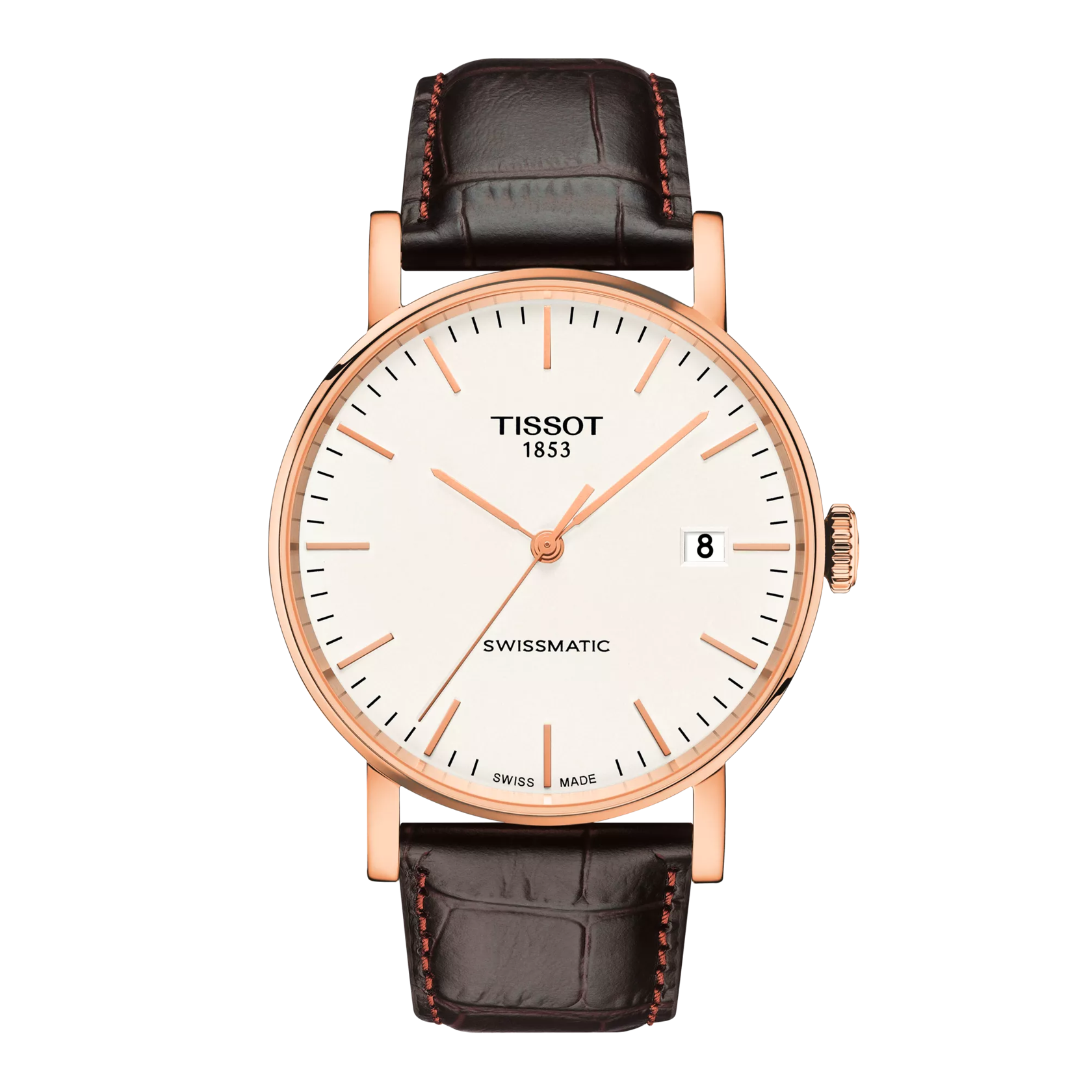
Tissot Everytime Swissmatic
The step up worth taking if mechanical craftsmanship and Swiss heritage are what you're actually after, not more accurate timekeeping. A genuine automatic movement with a sapphire crystal, though a meaningful share of that price is the name and the country of origin.

Casio Men's Diver-Inspired Watch
The benchmark for what forty-five dollars buys, and it out-ticks watches ten times its price on raw accuracy. If timekeeping and durability are what you actually need, the case for spending more is about mechanical craftsmanship, not about function.
A lot of guys shopping for a "better watch" are really after one of two different things: more reliable timekeeping, or a mechanical piece that's interesting to own and wind. Those are opposite directions on this list. If it's the first, a quartz watch already does that better than any automatic ever will, no need to spend more. If it's the second, an automatic is worth it, but go in knowing you're buying a hobby, not an upgrade in function.
Where the Real Math Lands
Cost per year of ownership tells a different story than the sticker price. A quartz watch like the Casio needs a battery swap every 1 to 2 years (a few dollars) and otherwise runs maintenance-free for a decade or more. An automatic like the Tissot benefits from a service roughly every 4 to 8 years, which typically runs $100 to $200 at a watchmaker. Over a 10-year span, the Casio costs closer to $60-70 total including battery swaps, while the Tissot can run $400-500 with a service factored in. The premium watch is the worse deal by function alone. It's a better buy specifically for someone who wants the mechanical hobby and the resale value over decades, and a worse one for someone who just wants to know what time it is.
So What Should You Actually Buy?
Buy budget if
- Reliable, accurate timekeeping is genuinely the goal
- You want a rugged daily-wear watch you won't stress about scratching
- You're not interested in the mechanics of how a watch works
- Your budget is better spent elsewhere in your wardrobe right now
Spend more if
- Mechanical craftsmanship is genuinely interesting to you, not just the look
- You want a piece that can be serviced and passed down for decades
- You've already got a reliable everyday watch and want a second, different one
- Swiss watchmaking heritage matters to you specifically
The Honest Summary
The gap between a forty-five dollar quartz watch and a two-hundred-ninety-five dollar Swiss automatic is real, but it runs in the opposite direction most guys assume: the cheap one is the more accurate one. What the premium watch buys is mechanical engineering, materials, and heritage, not better function. Figure out which one you're actually shopping for, a tool that tells time or a piece of craftsmanship you enjoy owning, before you spend more chasing the wrong one.
More in This Series
- Best Men's Watches Under $300 (main guide)
- Best Watch Brands Under $300
- Budget vs. Premium Watches: What Are You Actually Paying For? (you are here)
- Best Watch Gifts Under $350
- Best Men's Watches Under $100
- Seiko 5 vs. Orient Bambino
FAQs
No, usually the opposite. A basic quartz movement, the kind in most budget watches, is more accurate day to day than a mechanical automatic movement, the kind that justifies most premium watch pricing. Accuracy is not what the extra money buys.
The price gap is almost entirely about movement type and craftsmanship. The Tissot runs on a mechanical automatic movement, powered by wrist motion with visible engineering inside the case, while the Casio runs on a battery-powered quartz movement. You're paying for the mechanical engineering and the Swiss watchmaking heritage behind it, not for better timekeeping.
Yes. Automatic movements benefit from an occasional service every several years and need to be worn or wound regularly to keep running, since they're powered by motion rather than a battery. Quartz watches need a battery swap every year or two and otherwise run maintenance-free.
Yes. It keeps accurate quartz time, has real water resistance for a diver-styled watch, and costs a fraction of what similarly rugged automatic options run. It won't carry the mechanical prestige or resale value of a Swiss automatic, but as a daily beater under fifty dollars it is hard to beat.