Muscle Milk Genuine runs about thirty dollars for 2.47 pounds. Dymatize ISO100 runs about sixty dollars for 3 pounds. Twice the price, only a little more product. The obvious assumption is that you're paying double for double the protein value. You're not, and the real math here runs somewhere most guys don't expect.
Here's what the extra thirty dollars is actually buying, and why the cheap tub isn't automatically the cheap protein.
Where the Money Goes
| Upgrade | What Changes | Do You Notice? |
|---|---|---|
| Cost per gram of protein | Doesn't scale simply with sticker price, see below | Only if you actually do the math per tub |
| Protein purity (isolate vs. blend) | Extra filtering strips out fat, carbs, and lactose | Yes, mostly in digestion speed and macro cleanliness |
| Third-party testing | Independent lab verification of label claims | Yes, if you compete or are drug-tested |
| Added ingredients | Vitamins, blends, and flavor systems vs. a cleaner label | Sometimes, depends what you actually want from the shake |
| Brand and flavor variety | More flavor options, wider retail availability | Rarely changes results, mostly a preference thing |
The first one is the biggest surprise. The next two are where premium actually earns its price. The last two are preference, not performance.
The One That Surprises Most Guys
Cost per gram of protein
This is the number that actually matters, and it doesn't move the way the sticker prices suggest. Optimum Nutrition Gold Standard Whey, a mid-priced option at around fifty-five dollars, runs roughly $0.04 to $0.05 per gram of protein, the benchmark for the category. Dymatize ISO100 at sixty dollars lands close to that same range once you account for its 25g-per-serving isolate and full tub size, despite being the pricier product here. Muscle Milk at thirty dollars looks like the budget play on the shelf, but once you divide its 32g-per-serving protein blend across the tub, it works out closer to $0.06 per gram, worse value per gram of protein than either of the pricier options. The cheapest tub on the shelf is not automatically the cheapest protein.
The One That Sounds Like a Rip-Off and Isn't
Whey isolate's price premium over a whey-and-casein blend. It's tempting to assume you're paying extra purely for a fancier label. What isolate actually buys is an extra filtration step that strips out most of the fat, carbs, and lactose, leaving a purer, faster-digesting protein source with a cleaner macro profile, useful if you're cutting, lactose-sensitive, or want protein absorbed quickly post-workout. That processing step costs more to produce, which is where the price premium actually comes from, not a difference in amino acid quality at the protein level itself.
Comparing Across the Price Range
| Protein Powder | Price Tier | What You Get | Price | |
|---|---|---|---|---|
| Muscle Milk Genuine | Budget | Casein-whey blend, easiest on the wallet upfront | ~$30 / 2.47lb | Shop on Amazon → |
| Garden of Life Sport Organic | Mid | Plant-based, best for dairy-free diets | ~$50 / 2.3lb | Shop on Amazon → |
| ON Gold Standard Whey | Mid | The cost-per-gram benchmark for the category | ~$55 / 5lb | Shop on Amazon → |
| Dymatize ISO100 | Premium | Hydrolyzed isolate, third-party certified, cleanest macros | ~$60 / 3lb | Shop on Amazon → |
What the Jump From $30 to $60 Actually Buys
Using the two ends of this lineup: Muscle Milk at around thirty dollars and Dymatize ISO100 at around sixty. Double the sticker price, but as the math above shows, not remotely double the protein value, ISO100 actually edges out Muscle Milk on cost per gram despite costing more upfront.
What you get for the extra money is a purer, faster-digesting isolate with a cleaner macro profile (under 1g each of fat and carbs per serving), Informed Choice third-party certification verifying what's on the label is actually in the tub, and a protein source built specifically for post-workout timing rather than general meal supplementation. What you do not get is meaningfully more protein per dollar, that math actually favors the pricier option here.
So the upgrade is worth it if digestion speed, macro cleanliness, or third-party verification actually matter for your training or your sport. It's not about getting "more" protein for the money, since gram-for-gram the premium pick already wins that comparison too.

Dymatize ISO100 Hydrolyzed Protein Powder
The step up worth taking if digestion speed and macro cleanliness are what you're actually after, not just "more" protein for the money. 25g hydrolyzed whey isolate per serving, under 1g each of fat and carbs, Informed Choice certified, and cult-favorite Fruity Pebbles and Cocoa Pebbles flavors.
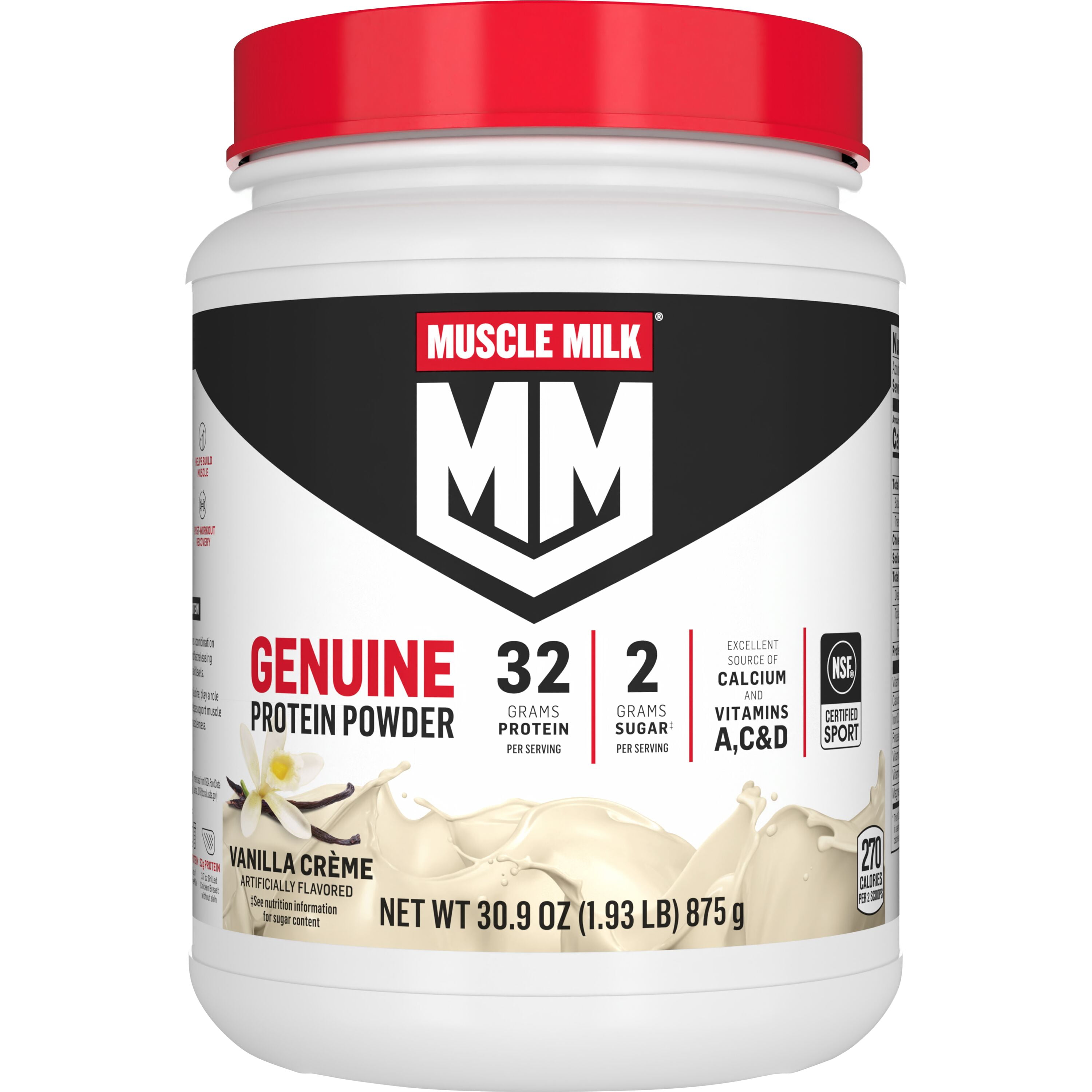
Muscle Milk Genuine Protein Powder
The lowest sticker price here, and still a genuinely good option for hitting daily protein totals without overcomplicating things. Just know it isn't the cheapest option per gram of protein, that title actually goes to the pricier picks on this list.
Divide the price by (protein grams per serving multiplied by servings per tub). That's the only number that tells you what you're actually paying for protein, not powder. Do this before assuming a bigger sticker price or a bigger discount is the better deal, since as this comparison shows, the relationship between price and value isn't as straightforward as it looks on the shelf.
Where the Real Math Lands
Per-tub cost isn't the full picture either, since tub sizes vary. Muscle Milk's 2.47lb tub and ISO100's 3lb tub aren't a fair apples-to-apples comparison on price alone, which is exactly why cost-per-gram is the number to actually track. On that basis, ISO100 edges out Muscle Milk despite costing twice as much upfront, and Gold Standard Whey at a middle price point remains the category benchmark for value. If you're buying on protein-per-dollar alone, the middle of this lineup, not the cheapest tub, is where the best math actually lands.
So What Should You Actually Buy?
Buy budget if
- You want the simplest way to hit daily protein totals without doing math
- You're using it as a meal supplement, not strict post-workout nutrition
- Taste and mixability matter more to you than macro precision
- You're not competing or drug-tested, so certification isn't a factor
Spend more if
- Digestion speed around your workout window actually matters to you
- You're cutting and want the cleanest possible macro profile
- Third-party certification matters for your sport or peace of mind
- You've done the cost-per-gram math and the premium pick actually wins
The Honest Summary
The gap between a thirty dollar tub and a sixty dollar tub is real, but it doesn't run the direction the price tags suggest. Cost per gram of protein, the only number that actually measures value here, favors the pricier isolate over the cheaper blend once you do the math. What premium protein actually buys is purity, digestion speed, and third-party verification, not simply more protein for your money. Do the division before you decide, the sticker price alone will point you the wrong way.
More in This Series
- Best Protein Powder for Men in 2026 (main guide)
- Best Creatine Supplements for Men in 2026
- Budget vs. Premium Protein Powder: What Are You Actually Paying For? (you are here)
FAQs
Not automatically, and not in the way most guys assume. The real differences are protein purity, digestion speed, and third-party testing, not necessarily cost per gram of protein, which can actually favor a mid-priced option over both the cheapest and priciest tubs.
Isolate goes through extra filtering to strip out most of the fat, carbs, and lactose, leaving a purer, faster-digesting protein source. That extra processing step is what costs more to produce, not a difference in protein quality at the amino acid level.
It's the most honest single number for comparing raw value, since sticker price alone is misleading once tub size and protein-per-serving vary. It doesn't account for purity, added ingredients, or digestion speed, so it's a starting point, not the only factor.
Yes, for what it's built for: an easy, good-tasting way to hit daily protein totals without overcomplicating things. It's a casein-whey blend with added vitamins, better suited to a meal supplement than strict post-workout nutrition, and it isn't third-party tested the way some premium isolates are.