Most guys upgrading their coffee setup start with the brewer, a fancier drip machine, a pour-over cone, a French press. The bigger lever is almost always the grinder, and it's the piece most people skip. A great brewing method with inconsistently ground beans still makes mediocre coffee. A mediocre brewing method with properly, consistently ground beans makes genuinely good coffee.
Why the Grinder Matters More Than the Brewer
A blade grinder, the cheap spinning-blade kind most people already own, chops beans essentially at random. Some particles end up as fine dust, others as large chunks, in the same batch. Fine dust over-extracts fast, turning bitter, while large chunks under-extract, staying sour and weak. You get both problems in the same cup, at the same time, no matter how good the brewing method is.
A burr grinder crushes beans between two surfaces set at a fixed gap, producing particles of consistent size. That consistency is what actually lets a brewing method do its job properly, extracting evenly instead of fighting an already-uneven grind. This is the upgrade that changes your coffee the most, more than the brewer itself.
Pour-Over vs. French Press: Different Cups, On Purpose
Pour-over passes hot water through grounds sitting in a paper filter. That filter catches sediment and most of the coffee's natural oils, producing a cleaner, brighter cup that highlights acidity and individual flavor notes. It takes more attention, controlling pour speed and timing, but rewards it with clarity.
French press skips the paper filter entirely, steeping grounds directly in water before pressing them to the bottom with a mesh plunger. Oils and fine sediment stay in the final cup, producing a heavier, fuller-bodied coffee. It's also the more forgiving method, less technique-dependent, which makes it the better starting point if you're new to manual brewing.
The Picks
| Product | Role | Best For | Price | |
|---|---|---|---|---|
| Baratza Encore Conical Burr Grinder | The upgrade that matters most | Any brewing method | ~$150 | Shop on Amazon → |
| Hario V60 Pour-Over Starter Set | Clean, bright cup | Highlighting flavor notes | ~$25 | Shop on Amazon → |
| Bodum Chambord French Press, 34oz | Full-bodied, forgiving | Beginners, daily use | ~$40 | Shop on Amazon → |
#1 The Upgrade That Actually Matters: Baratza Encore
The grinder coffee professionals point beginners toward more than any other, and for good reason. Forty individual grind settings covers everything from espresso-fine to French-press-coarse, with the consistency a blade grinder simply can't deliver. This is genuinely the single best dollar-for-dollar upgrade in home coffee.
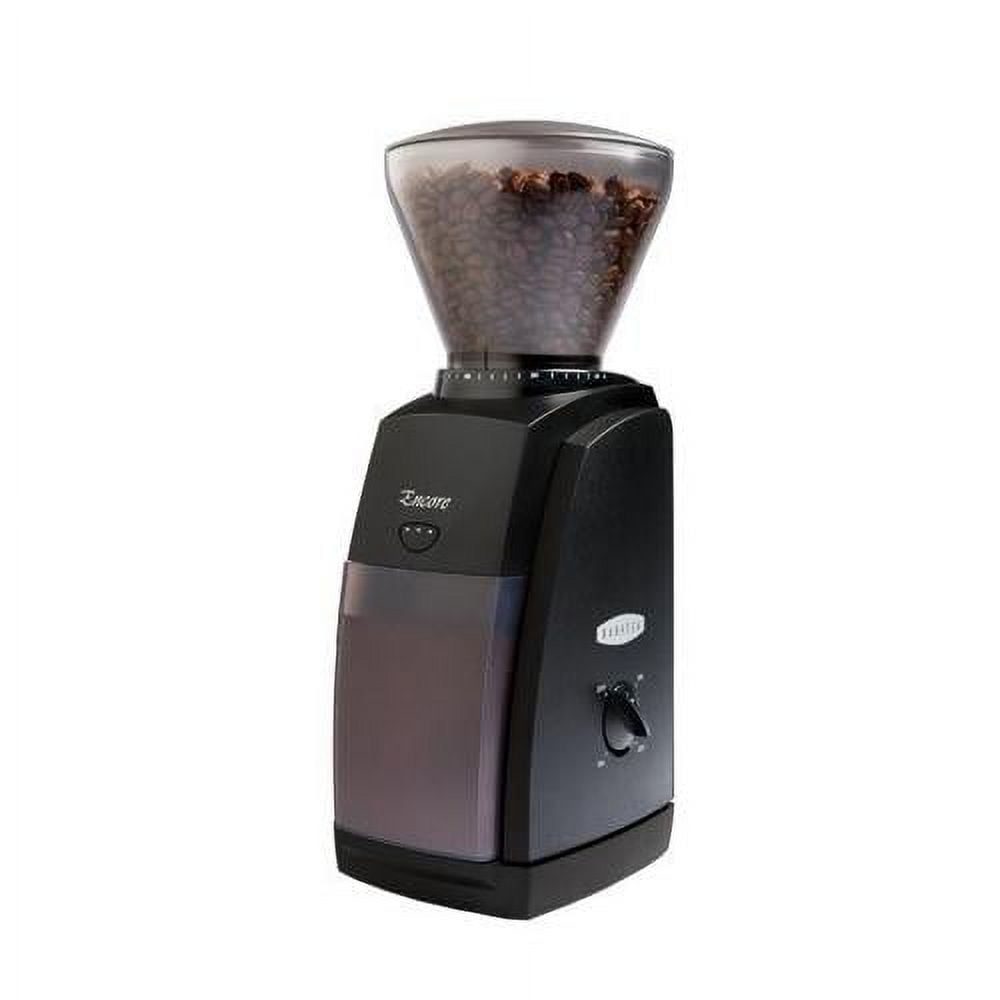
Baratza Encore Conical Burr Coffee Grinder
The entry-level grinder coffee professionals actually recommend. Consistent particle size across the full range, from espresso to French press, is what separates this from anything with spinning blades.
#2 The Clean Cup: Hario V60 Pour-Over Starter Set
Everything needed to start, in one box: the dripper, a glass server, and forty filters. The single large hole in the V60 cone gives you real control over pour speed, which is what actually shapes the final cup, pour fast for a lighter result, slow for something richer.
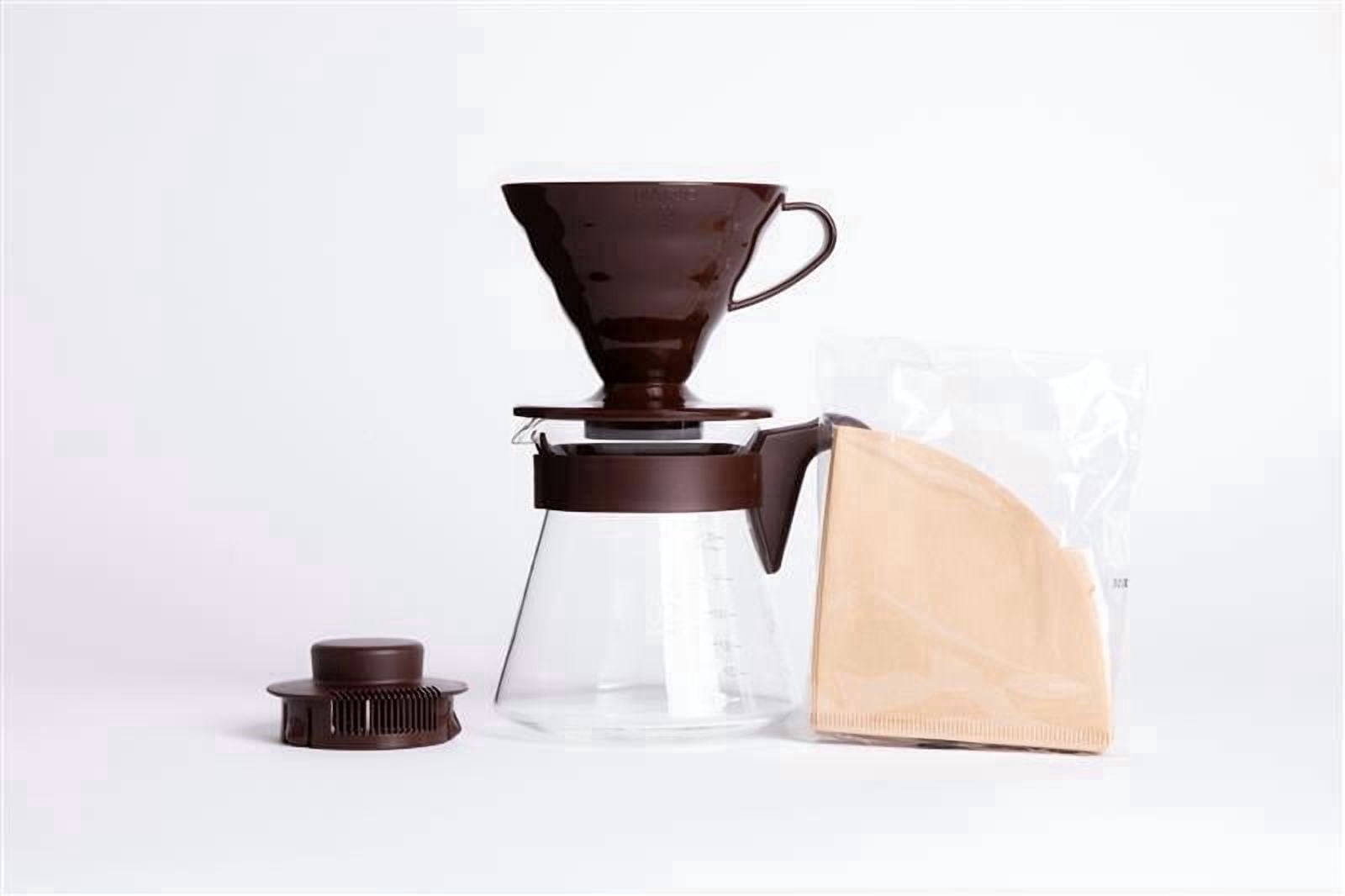
Hario V60 Pour-Over Coffee Starter Set
Dripper, server, and forty filters in one purchase, everything needed to start pour-over the same day it arrives. The single large hole gives real pour-speed control over the final cup.
#3 The Forgiving Full-Bodied Cup: Bodum Chambord French Press
The original 1950s design, still made the same way. No paper filter means the coffee's natural oils stay in the cup, producing a heavier, richer result than pour-over. It's also more forgiving of imprecise technique, which makes it the better starting point if you're brand new to manual brewing.
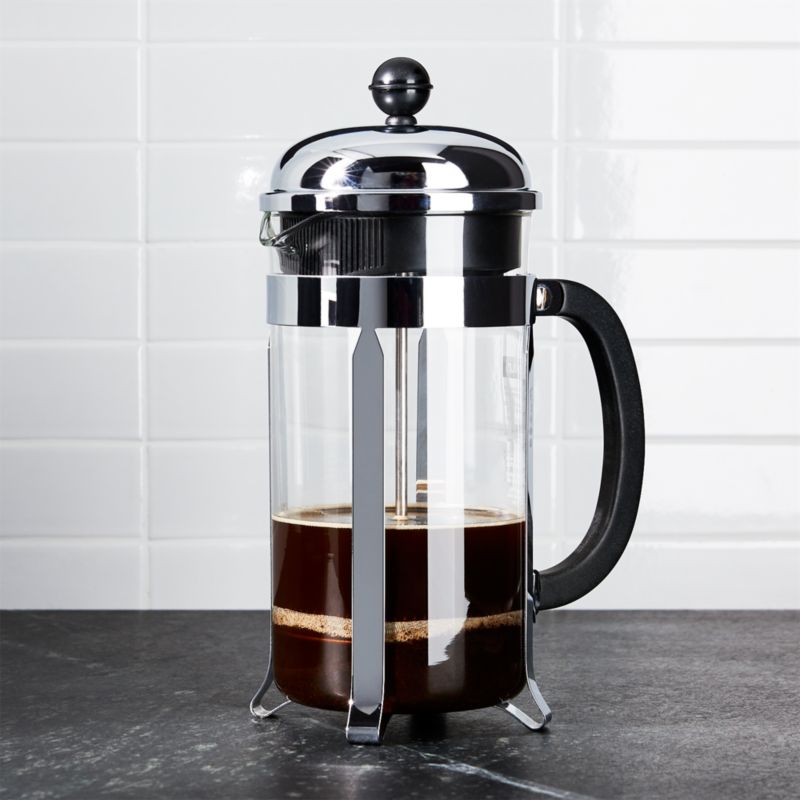
Bodum Chambord French Press Coffee Maker, 34oz
The classic French press, built the same way since the fifties. Full-bodied, richer coffee, and genuinely the easiest manual brewing method to get right on the first try.
Every Pick at a Glance
Pour-over wants a medium grind, roughly the texture of sea salt. French press wants coarse, closer to breadcrumbs, since a fine grind slips through the mesh filter and turns the cup muddy. Same beans, same grinder, different setting, that's the whole adjustment.
The Honest Take
If you're only buying one thing, make it the grinder. It's the upgrade that actually changes what ends up in the cup, regardless of which brewing method you use with it. Pour-over and French press aren't a better-or-worse choice, they're two genuinely different cups, and the honest answer is to own both once you know which one you reach for more.
More House & Gear Guides
FAQs
Yes, and it matters more than most other coffee equipment upgrades. A blade grinder chops beans unevenly, producing a mix of fine dust and large chunks that brew inconsistently. A burr grinder crushes beans between two surfaces at a set gap, producing uniform particle size, which is what actually determines flavor consistency and extraction quality.
Pour-over passes hot water through grounds and a filter, producing a cleaner, brighter cup since the paper filter catches sediment and most oils. French press steeps grounds directly in water with no paper filter, producing a fuller-bodied, heavier cup since oils and fine sediment stay in the final coffee.
Pour-over uses a medium grind, similar in texture to sea salt, since a faster water flow through a paper filter needs a slightly coarser grind than espresso but finer than French press. French press uses a coarse grind, similar to breadcrumbs, since a fine grind would slip through the mesh filter and turn the coffee muddy.
You need a burr grinder, but not necessarily an expensive one. Entry-level burr grinders in the $150 range deliver most of the consistency benefit over blade grinders, and are the single upgrade that improves coffee quality more than upgrading the brewing method itself.