Bitcoin Miners You Can Actually Buy on Amazon
"Bitcoin miner" sounds like something that belongs in a warehouse, not a bedroom. That used to be true. It isn't anymore. Home mining hardware has split into two real categories: small, quiet, open-source devices built for hobbyists who want a genuine shot at a lottery-style block reward, and larger machines built to actually turn a profit against your electricity bill. Both categories are real products, sitting on real Amazon listings, and both come with real math worth understanding before you buy.
What These Devices Actually Do
Every device on this list is an ASIC (application-specific integrated circuit) miner. It's a purpose-built chip that does exactly one thing: run the SHA-256 calculations Bitcoin's network uses to validate transactions and create new blocks. You plug it in, connect it to Wi-Fi or Ethernet, point it at a mining pool (or go solo), and it starts contributing hash power to the network in exchange for a shot at Bitcoin rewards.
There are two ways to use one. Pool mining combines your hash power with thousands of other miners and pays out small, steady, proportional rewards based on your contribution. Solo mining means you're competing alone for the entire block reward, currently 3.125 BTC plus fees. The odds of a small device finding a block solo are genuinely long, closer to a lottery ticket than an investment, but it has happened: home miners running devices like the ones below have found real blocks and collected six-figure payouts, most recently a $342,000 find in late 2025 from a cluster of small open-source units.
The Honest Math, Before You Look at Specs
Every number below (hashrate, power draw, efficiency) is fixed by the hardware. What isn't fixed: Bitcoin's price, the network's total difficulty, and your electricity rate. All three move constantly, and together they determine whether any given miner is profitable on a given day. A device that pencils out at $0.16/kWh electricity might lose money at $0.30/kWh. A device that looked profitable in a bull market can go underwater when the price drops or difficulty rises.
Don't trust a profitability number you see anywhere, including this article, as a fixed fact. Plug your own electricity rate into a live mining calculator (Solo Satoshi and CoinWarz both host free ones) before buying anything on this list.
Quick Comparison: The Five Devices
| Device | Hashrate | Power | Best For | Price |
|---|---|---|---|---|
| Bitaxe Gamma 601 Cheapest Entry | ~1.2 TH/s | ~18W | Lottery hobbyist | ~$179 |
| Bitaxe Supra Hex 703 | ~4.2 TH/s | ~90W | Tinkerer, mid-budget | ~$249 |
| NerdQaxe++ | ~6 TH/s | ~100W | Best efficiency, open-source | ~$299 |
| Avalon Nano 3S | ~6 TH/s | ~140W | Zero-tinkering beginner | ~$299 |
| Antminer S19 | ~90-110 TH/s | ~3,000W | Serious, dedicated setup | ~$649 |
#1: Bitaxe Gamma 601 - The Cheapest Way to Actually Try This
This is the entry point for the entire open-source home mining movement. A single BM1370 ASIC chip, the same chip family used in Bitmain's flagship Antminer S21 Pro, delivers around 1.2 TH/s at just 17 to 18 watts of power. That's genuinely less electricity than a phone charger uses. Fully open-source hardware and firmware (AxeOS) means you can inspect, modify, and tune every part of it.

#2: Bitaxe Supra Hex 703 - More Hash Power, Still Desk-Friendly
Six BM1368 ASIC chips instead of one bumps hashrate up to roughly 4.2 TH/s, at around 90 watts. It's still air-cooled, still quiet enough for a desk, and still fully open-source. This is the natural step up once someone's tried the Gamma 601 and wants meaningfully better solo odds without jumping to industrial-scale hardware.

#3: NerdQaxe++ - The Efficiency Leader in Open Source
Four BM1370 chips deliver around 6 TH/s at roughly 100 watts, which works out to some of the best efficiency (joules per terahash) of any open-source miner available. Two confirmed Bitcoin blocks have been found by NerdQaxe++ units since 2025, including one from a home cluster running through a self-hosted node. It's the pick for anyone who wants maximum hash power per watt without leaving the open-source, hands-on ecosystem.
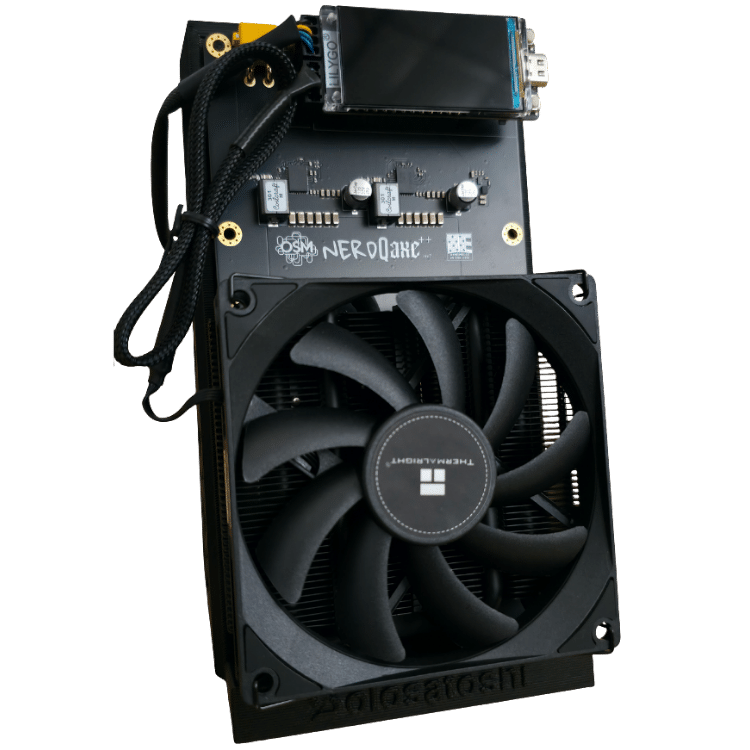
#4: Avalon Nano 3S - Zero Tinkering, App-Based Setup
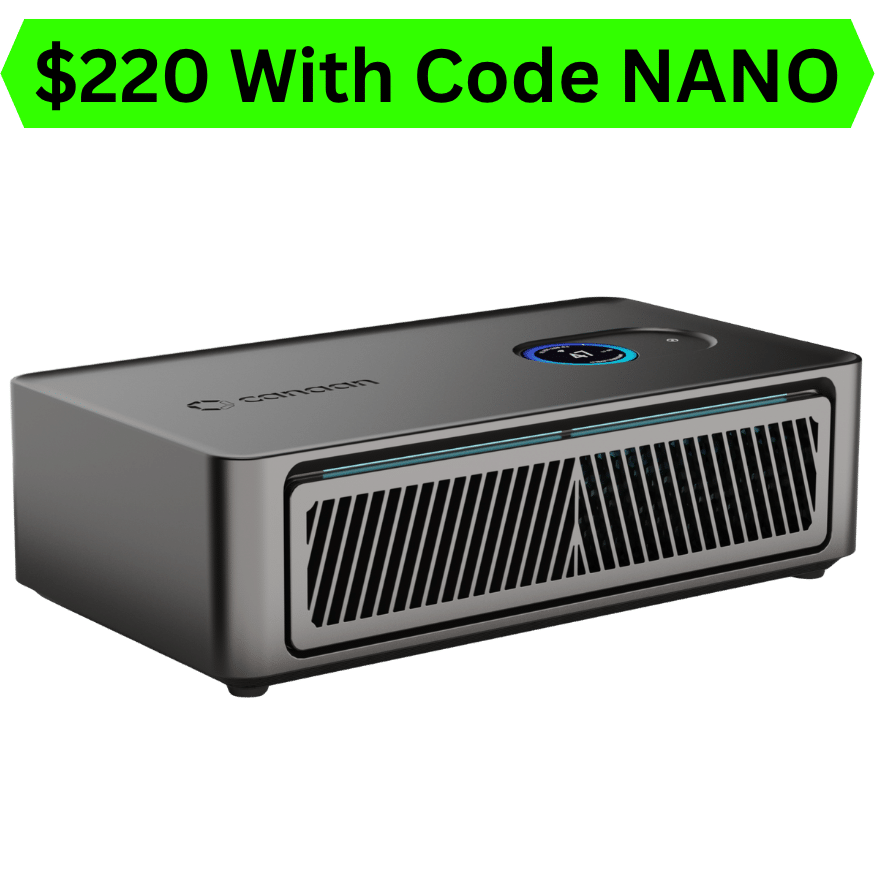
Built by Canaan, a Nasdaq-listed manufacturer, the Nano 3S trades open-source flexibility for genuine plug-and-play simplicity. Three power modes (roughly 66W to 140W) are selected through a phone app, not a browser dashboard, and most people are mining within five minutes of opening the box. At its top mode it matches the NerdQaxe++'s hashrate, just at lower efficiency, in exchange for not needing to touch a single setting.
#5: Antminer S19 - The Serious, Dedicated-Setup Tier
This is a different category entirely. Bitmain's Antminer S19 series delivers 90 to 110+ TH/s, roughly 15 to 20 times the hash power of every device above it combined, but it requires a 220V circuit (not standard household 110V), draws around 3,000 watts continuously, and runs loud enough (75+ dB) that it needs a garage, basement, or dedicated space, not a bedroom. This is the tier where mining stops being a desktop hobby and starts being an actual operation you plan around: dedicated wiring, ventilation, and a real conversation with your electric bill.

Which One Actually Makes Sense for You
- Curious, want to try it cheaply: Bitaxe Gamma 601. Under $200, teaches you the whole process, minimal electricity cost either way.
- Want the best odds without going industrial: NerdQaxe++. Best efficiency-per-watt in the open-source lineup, with actual confirmed block finds.
- Don't want to touch any settings, ever: Avalon Nano 3S. App-based, factory-built, mining in five minutes.
- Have a dedicated space, a real electrical plan, and want it to actually compete for daily income: Antminer S19. Everything below this tier is a hobby purchase; this is the first tier where it's closer to a real operation.
What to Know Before You Buy Any of These
- Solo mining is a lottery, not a plan. At home-scale hashrates, the odds of any single device finding a block are extremely long. It has happened to real people. It's not something to count on.
- Pool mining pays small and steady. If daily income matters more than lottery odds, pool mining against your hashrate share is the more predictable path, though returns are modest at hobbyist scale.
- Check your actual electricity rate before buying anything above the Bitaxe tier. A device that's profitable at $0.10/kWh can lose money at $0.25/kWh. This is the single biggest variable in the entire decision.
- The S19 tier needs real planning. A dedicated circuit, adequate airflow, and noise tolerance aren't optional at that hashrate. Don't buy one assuming it plugs into a normal outlet in a normal room.